Cafe Sci

Antimicrobial resistance in rivers – a public health risk? | Elitsa Penkova

Thursday, 20th June 2024 at the Poly, Falmouth

In-person attendance via the Poly website.

Virtual attendance via Eventbrite.

Freshwater environments naturally harbour diverse microbes but are also subject to human- and animal-associated bacteria and contaminants.

About the talk

Freshwater environments, such as rivers and lakes, naturally harbour diverse microbes but are also subject to human- and animal-associated bacteria and contaminants.

Growing rates of antimicrobial-resistant bacteria are a significant public health threat. Recent research suggests that person-to-person transmission alone may not fully explain how the current levels of drug-resistant infections are maintained in the general public and suggest that other sources, such as the natural environment, could be an important contributor. For example, wastewater and agricultural run-off are strongly linked to increased levels of antimicrobial resistance in riverine bacteria, thereby increasing the risk of transmission.

The increasing popularity of recreational activities, like river swimming in the UK, has raised concerns about people’s exposure to antibiotic-resistant bacteria. Although emerging evidence suggests a link between spending time in these environments and resistant infections, research remains limited.

To address this, Elitsa Penkova will outline her PhD project which investigates the potential health risks of antimicrobial-resistant bacteria in rivers and lakes through three key studies: a systematic review assessing the current evidence on this topic; an online health questionnaire investigating the risk of experiencing illness after a river swim; and an epidemiological study (the ‘Poo-Sticks’ survey) directly investigating links between exposure to faecally-polluted water and the risk of gut colonisation by resistant bacteria in river swimmers.

About the speaker

Elitsa Penkova is an evolutionary (micro-) biologist now transitioning to an environmental epidemiologist, researching bacterial resistance to antibiotics. Her goal is to produce research that offers compelling evidence for policy makers, ultimately aimed at safeguarding public health.

Cafe Sci

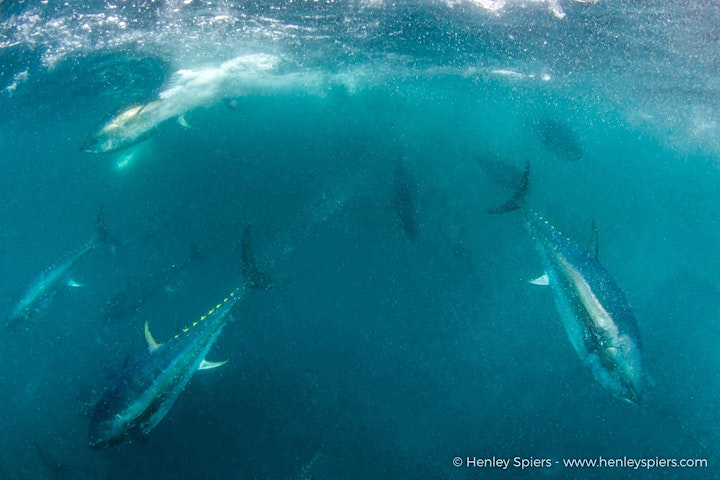
Tracking the Iconic Atlantic Bluefin Tuna from Cornwall

Thursday, 21st March at 6pm.

Tickets available for attendance

Join Tom for an evening talking tuna.

About the talk

Join Tom for an evening talking tuna. Over the past decade we have seen the iconic Atlantic bluefin tuna return to waters off Cornwall. Tonight we use electronic tracking to shed light on the secret lives of the fish that once again call Cornwall home for a few months of the year.

Where do they go when they leave? What do they do there? and do they come back?

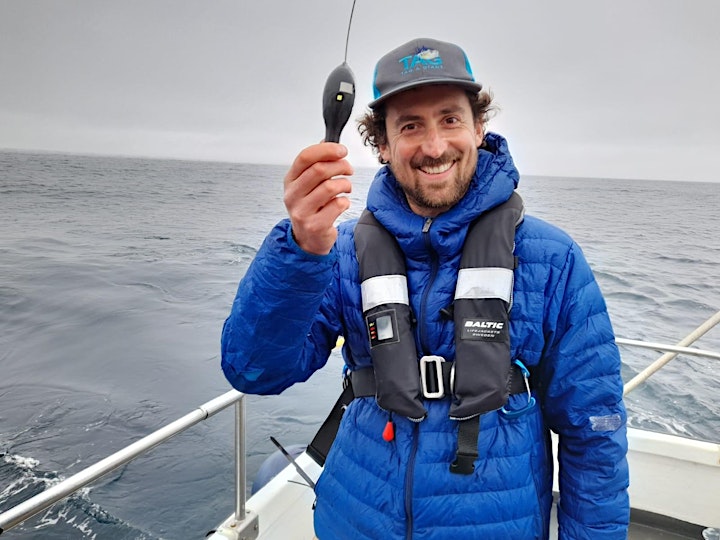
Tom Horton is a conservation scientist based at the University of Exeter. His work focuses on the spatial ecology of marine animals, including fisheries interactions, behaviour, and migration ecology. Previous work has included using fisheries data to document the return of Atlantic bluefin tuna to the UK and Ireland working as the Project Officer for Thunnus UK.

Cafe Sci

Bio-Semiotics – A New Foundation For Social Science?

Thursday, 18th January 2024 at 6pm.

Tickets available for attendance

Join Robin Johnson as he explores a relatively new approach in contemporary biology.

.

About the talk

Robin will explore the potential that there may be in a relatively new approach in contemporary biology that offers a fresh and radically different account of the nature of our humanity than the one we have seen from 20th Century evolutionary psychology and sociobiology.

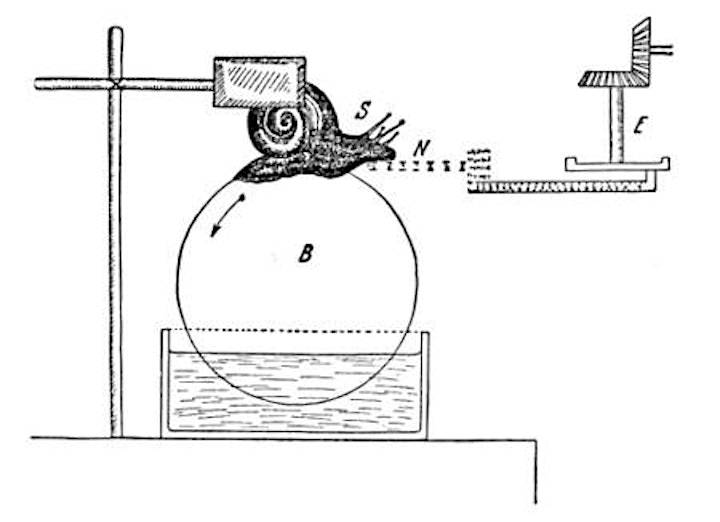
The starting point will be the concept of the Umwelt, as developed by Jakob von Uexkell, as a novel perspective on subjective, ‘lived’ experience.

He will be illustrating this potential in the context of our growing understanding of ‘complex trauma’, compound psychological and emotional trauma, the dynamics of social exclusion and the work of many creative services in turning lives around.

About the Speaker

Robin Johnson was a psychiatric social worker, then a specialist advisor on mental health and housing with the department of health and later a journal editor and a visiting fellow at several universities. Robin’s work included setting up PIElink, a platform to connect people addressing psychological and emotional issues that go with homelessness and other complex psychological and emotional needs. He has recently published two books on these Psychologically Informed Environments.

Cafe Sci

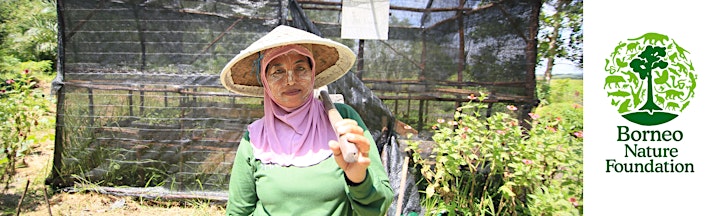
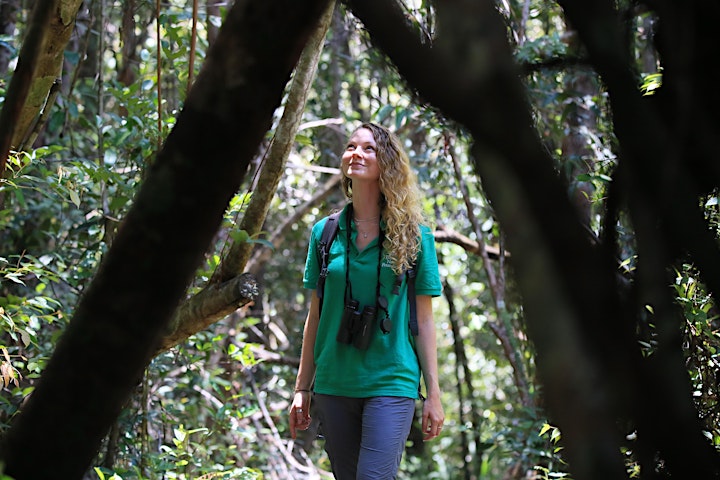
Rooting for Rainforests: how local communities are paving the way for conservation in Borneo

Thursday, 16th November 2023 at 6pm.

Samantha Salt, Borneo Nature Foundation’s Senior Engagement Officer tells us how local communities are paving the way for conservation in Borneo.

A Café Sci event hosted by Cornwall Science Community.

With climate change raising its ugly head through extreme weather events and wildfires all around the world, and with our rainforests being lost at an alarming rate, there’s never been a more important time to find long-lasting solutions for people and planet. Borneo’s rainforests are special; they are the only place in the world home to the Critically Endangered Bornean orangutan and its very deep peat deposits make it one of the largest land-based carbon stores on Earth. What happens in Borneo impacts us all.

At the Borneo Nature Foundation, we have powerful, local and grass-roots solutions for this global problem. We work with a range of vital stakeholders from the National Park and the government to local communities and school children to understand, restore and protect the rainforest for future generations.

Our projects have been globally recognised, having received the Global Warming Mitigation Project’s Keeling Curve Prize (2020), the World Economic Forum’s Trillion Trees Challenge and People’s Choice Award (2020), and the iF Design Social Impact Prize (2022). Come along to this talk to learn about the magic of Borneo, the world-leading ways we’re supporting and empowering local people to be global conservation leaders, and how you can be a part of it.

Sam is Borneo Nature Foundation’s Senior Engagement Officer, working to raise international awareness of the charity’s on-the-ground conservation projects in Indonesia. Having spent time in the rainforest working directly with the project teams, she has first-hand experience and many stories to tell. Prior to working at the Borneo Nature Foundation, Sam studied her master’s and bachelor’s degrees in conservation at the University of Exeter’s Penryn campus here in Cornwall.

Cafe Sci

The Power of Marine Citizen Science

Thursday, 15th June 2023 at 6pm in person at the Poly, Falmouth and online.

Join us for an evening with Ben Holt, Co-founder and CEO of The Rockpool Project, as he takes you on a journey into the hidden worlds of rockpools in Cornwall.

The Rockpool Project are a not-for-profit community interest company, passionate about connecting people of all ages and backgrounds to the incredible wildlife found around our coastline. Their work encompasses ecotourism, community engagement, education and citizen science.

Ben has spearheaded rockpool conservation and education in the South West since the inception of the organisation and will spend the evening presenting their most exciting current and upcoming projects. So come along, dip your toes in to Cornish rockpools, join the conversation and find out how you could get involved.

Cafe Sci

‘Bringing Rivers to The Poly’: A talk by The Westcountry Rivers Trust

Thursday, 18th May 2023 at 6pm.

Join us when Westcountry Rivers Trust bring rivers to The Poly! Hear all about their projects and how you could get involved.

This event will be held in-person at the Poly in Famouth, or online via Zoom – online tickets can be bought via Eventbrite. Please follow the relevant links above.

About the talk

Join the Westcountry Rivers Trust (WRT), an environmental charity putting science at the heart of its river conservation in Cornwall for an evening of conversation and films.

From source to sea, clean, flowing rivers support the resilience of their surroundings – ecosystems, wildlife, people and their livelihoods. Across a variety of projects, WRT is tackling river-related challenges to ensure freshwater habitats, and all who depend on them, can thrive.

Come along to learn about some of the charity’s projects restoring and protecting the county’s rivers and wildlife, and how being a citizen scientist with the charity makes a big impact for the short and long-term health of the waterways being monitored. Plus, be among the first to see its short new film ‘Science, Citizens and a Love of Westcountry Rivers’, showcasing the charity’s river guardians of the region.

This session comes to Falmouth as a part of the ‘Bringing Rivers to You’ campaign, where WRT is taking the joys and stories of local rivers into bustling town centres to reconnect communities with their waterways.

Cafe Sci, CSC excursion

Cornwall Marine Research Insights | Panel Discussion

Tuesday, 21st March 2023, 6:30-9pm on University of Exeter’s Penryn Campus. Register your interest via Eventbrite.

Join us for an evening with four scientists at the forefront of marine and coastal research in Cornwall and further afield.

Exeter Marine in association with CRaB CLAWS and the Cornwall Science Community

Join us for an evening with four scientists at the forefront of marine and coastal research in Cornwall and further afield. There will be an opportunity to hear about their research, to find out more about community engagement and activities central to their projects, and to ask questions during a discussion with the panel of scientists.

The evening’s events will be led by Professor Brendan Godley (Professor of Conservation Science, University of Exeter) and Dr. Roger Wood (Senior Lecturer in Science, Biodiversity and Conservation Education, Scientist-At-Large with CRaB CLAWS: Conservation, Rewilding and Biodiversity Communities Leading Action for Wildlife Survival, and Project Officer with the Cornwall Science Community).

Speakers:

  • Dr. Sarah Nelms: Lecturer in Marine Vertebrate Ecology and Conservation at the University of Exeter. The impacts of plastic pollution on marine vertebrates
  • Tom Horton: Postdoctoral Researcher at the University of Exeter. The return of Atlantic bluefin tuna to the United Kingdom
  • Professor Martin Stevens: Professor of Sensory and Evolutionary Ecology at the University of Exeter. Behaviour, coloration, and survival in a changing world
  • Dr. Ian Hendy: Senior Lecturer and Researcher in Coastal Ecosystems at the University of Portsmouth. Connecting the restoration dots: what are the missing blue-green gaps?


Do get in touch with any questions!

CSC excursion

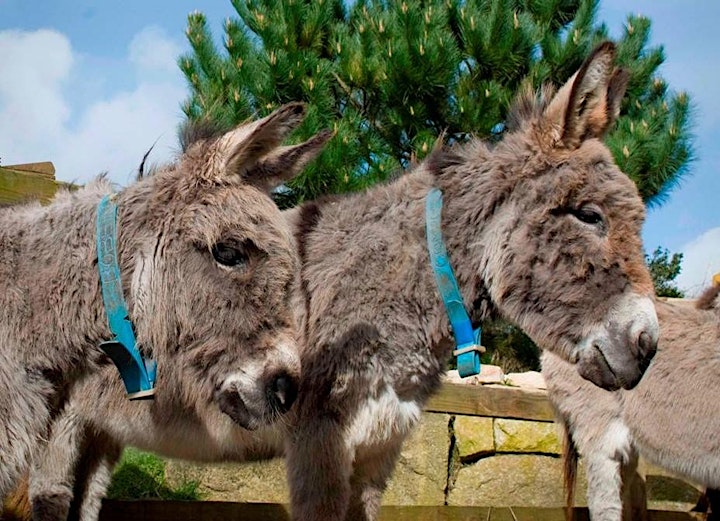
Flicka Donkey Sanctuary Talk & Tour

Saturday, 18th March 2023. Book your tickets via Eventbrite.

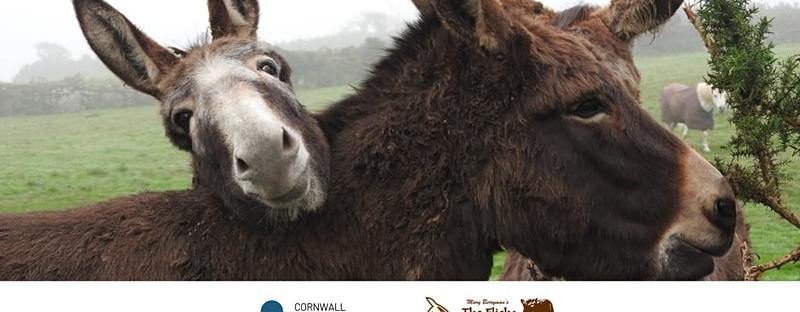
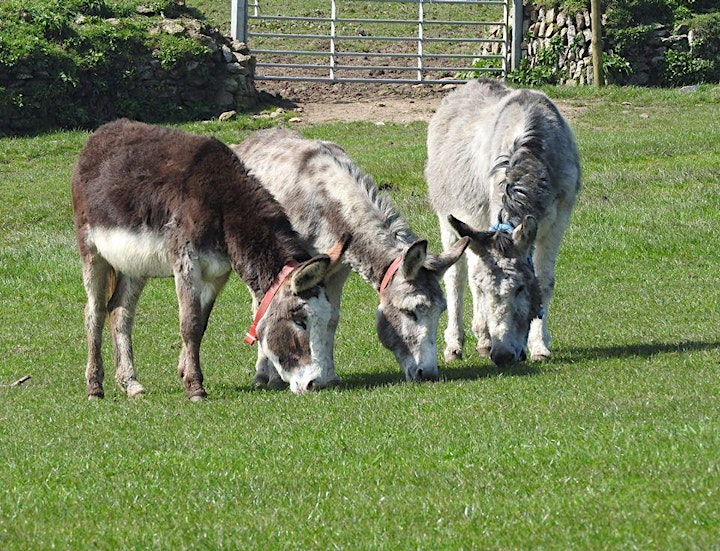
Join us for a talk and a tour at the Flicka Donkey Sanctuary.


		Flicka Donkey Sanctuary Talk & Tour image

About the day

After the success of last year’s event, we will be paying Flicka Donkey Sanctuary another visit this year.

Please join us at Flicka at 13:50, car parking is available on site. At 2pm the Flicka team will introduce us to some of the donkeys at the sanctuary and share their stories about both the individuals and the sanctuary.

At the sanctuary, donkeys have been rescued from conditions of abuse and neglect. The sanctuary provides them with a safe and caring home for life.

You can find out more about The Flicka Donkey Sanctuary on their website: https://www.flickafoundation.org.uk/

All images used on this page are from The Flicka Foundation website.


		Flicka Donkey Sanctuary Talk & Tour image

Donations

£5 from each ticket will go to The Flicka Donkey Sanctuary (the rest covers Eventbrite’s costs).

Any additional donations can be made to the Sanctuary on the day.

Keep an eye out for more events on our website: www.cornwallsciencecommunity.org

If you have any questions please contact us at: info@cornwallsciencecommunity.org

Article Series

Species loss and rewilding in Cornwall

written and illustrated by Natasha Connor

Many centuries ago, clean rivers rippled across Cornwall. Had you walked by, you may have spotted beavers building dams and otters diving for fish in the sparking water. The songs of countless birds rang through the unpolluted sky. Solitary eagles soared above, scouring the land for hares and grouse. Beyond the rugged cliffs and moorlands, lush temperate rainforests awaited. Lynx, wolverines, and wild boars made their homes beneath the twisting branches.

Today, Cornwall presents a very different picture. It has followed the same path as the rest of the UK, one of the most nature-depleted countries in the world. Since the industrial revolution, nearly half of the UK’s biodiversity has been lost, and many of our species now hover on the brink of extinction. This has been catastrophic for our ecosystems. However, there are rays of hope: several organisations are working to reverse this trend, rewilding parts of Cornwall to bring back some of the species we’ve lost.

Rewilding is a progressive conservation strategy that goes beyond protecting natural areas. It aims to restore areas of land to their natural states. This can involve reintroducing lost species, planting trees, or simply allowing nature to reclaim an area. Species reintroductions are integral to the larger rewilding movement. For uncultivated land to thrive, its ecosystem needs to be healthy. This requires a rich diversity of species.


Species loss -why does it matter?

Our native species have been co-evolving for thousands of years. The ecosystems they formed worked like well-oiled machines, with each trophic level dependant on the others in a complex web. When a species is removed, these ‘who eats who’ systems are dramatically altered, and sometimes destroyed.

133 species have gone extinct in the UK since the 1500s, and the decline is accelerating. Since the 1990s, nearly half of terrestrial mammal species and three fifths of butterfly species are found in fewer places, according to the State of Nature Cornwall 2022 report. In addition to the nationwide losses, several species have become locally extinct in Cornwall since the 1970s. This includes 21 breeding birds, 4 vascular plants, and 8 bumblebees.

The effect of species loss ripples through the complex web of food chains. This is known as trophic cascades, and can result in secondary extinctions.

Here’s an example: What happened when sea lions and whales were overfished in Alaska? Their predators, orcas, had to look elsewhere for food. The orcas switched to hunting sea otters and drastically reduced their population. Without the threat of otters, sea urchins were able to multiply unimpeded. These urchins prowled the sea floor, devouring vast forests of kelp. Without kelp forests, many species have been nearly wiped out of the area from starvation. Alaskan sea otters are keystone species: they have an outsized impact on their environment and hold their ecosystems together.

Keystone Species

Many of the UK’s keystone species (and almost all of our large ones) have been hunted to extinction, turning our ecosystems into distorted shadows of what they once were. Keystone species can be divided into three categories: predators, ecosystem engineers, and mutualists.

  • Predators restrict their prey’s population sizes, and therefore protect their prey’s food source. The loss of our apex predators, such as lynx and wolves, resulted in a deer population explosion. Without the predators they’d evolved with, their populations grew unchecked. Deer are believed to be at the highest level they’ve been in 1000 years. In some parts of the UK, this causes significant crop damage and obstructs forest growth.
  • Mutualists are species that interact with others for the benefit of both. Bee and flowering plant species are mutualists. They depend on each other for survival.
  • Ecosystem engineers are species that create, maintain, or destroy habitats. Beavers and water voles are two examples. These two species used to be found throughout Cornwall, creating vital habitats and stabilising the water cycle, but became extinct. A few organisations are now bringing them back, returning crucial components to our broken ecosystems.

Rewilding in Cornwall

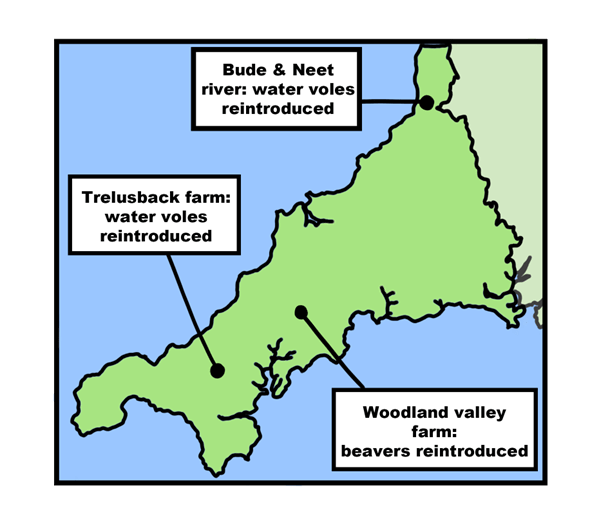
Rewilding projects in Cornwall:

Water Voles reintroduced at Bude & Neet river
Beavers reintroduced at Woodland Valley farm
Water Voles reintroduced at Trelusback farm

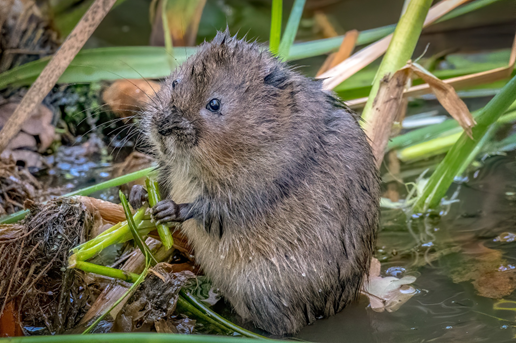
Water voles

Water voles are believed to be one of the UK’s fastest- declining mammals. Due to habitat loss, water pollution, and predation from invasive minks, they have been extinct in Cornwall since the 1990s.

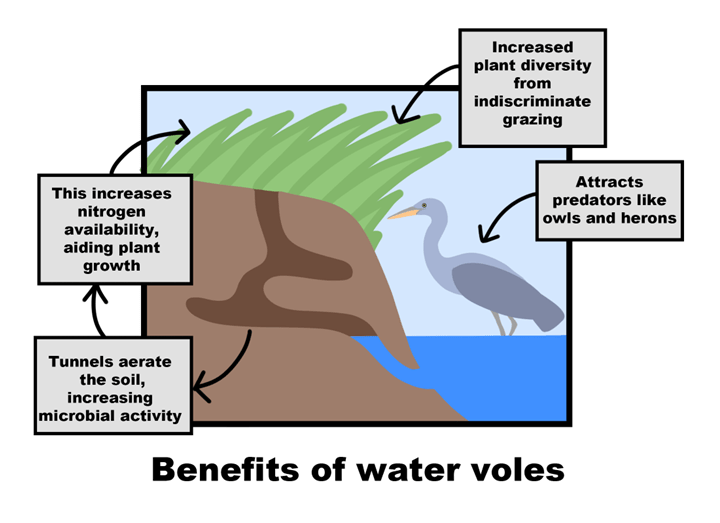
Their burrowing, grazing, and edibility make them crucial to wetland ecosystems. Their burrows aerate the soil, increasing microbial activity. This, in turn, regulates nitrogen availability and so aids plant growth. Water voles’ wide-ranging diet (and large appetite) prevent shores and riverbanks from becoming overgrown or dominated by a single species, increasing biodiversity. They are also an excellent food source for numerous species, such as barn owls, kestrels, and otters.

In 2013, Westland Countryside Stewards released 100 water voles into the Bude river catchment, and 177 water voles into the Neet river catchment.

They returned to southern Cornwall very recently: in 2022, Kernow Conservation released 150 water voles into Trelusback Farm, a 33 acre natural area near Falmouth. According to Kernow Conservation director Alana Scott, water voles will “hopefully attract predators like herons and owls… and increase plant diversity and microbial activity”.

Benefits of water voles include increased plant diversity from indiscriminate grazing, attraction of predators like owls and herons. Additionally, tunnels aerate the soil, increasing microbial activity - this increases nitrogen availability, aiding plant growth.

Beavers

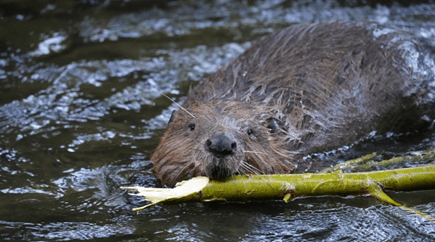
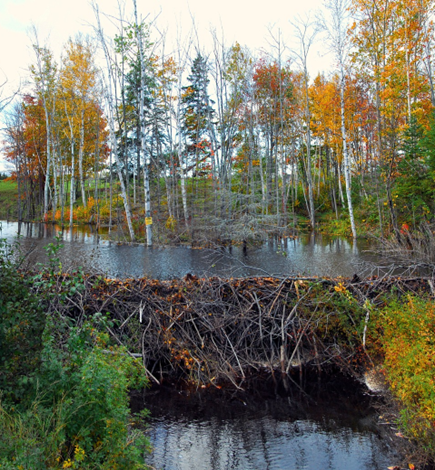
Beavers disappeared from the UK 400 years ago, when they were hunted to extinction. They modify their habitats by building dams, burrowing, and tree coppicing. This dramatically alters the landscape. They create wetland comprised of canals, ponds, and mires: vital landscapes for many species. This includes otters, water voles, and numerous types of birds and fish. The dams filter the sediment from rivers, providing a healthier habitat and water source for downstream  animals.

The wetlands store water in the land, and the dams slow river flow. These two aspects reduce both flooding and drought, making land more resilient and resistant to the severe effects of climate change. In addition to reducing climate change’s symptoms, they directly fight the cause: the wetlands and dams they create capture carbon.

In 2017, beavers returned to Cornwall. The Cornwall Beaver Project ran a reintroduction program, enclosing the animals in 5 acres of woodland. Since then, the area has changed dramatically. The dams and ponds the beavers created have slowed river flow, reducing both flash flooding and drought. According to Dr Alan Puttock, a researcher at the University of Exeter, the “peak flows after heavy rainfall events have been reduced by up to 33%”, showing the effectiveness of beavers in flood management. The site has also become more biodiverse: 13 new species have been recorded at the site. One of those was the willow tit, the UK’s most threatened resident bird.

There are a few other beaver enclosures across Cornwall, such as Cabilla Cornwall. However, like at Woodland Valley Farm, these beavers are enclosed in private land. There are no wild beavers in Cornwall. They only became a protected species in 2022, and the current complex licensing regulations make it difficult for organisations to release them into the wild. 

Other reintroduction programs

Red squirrels

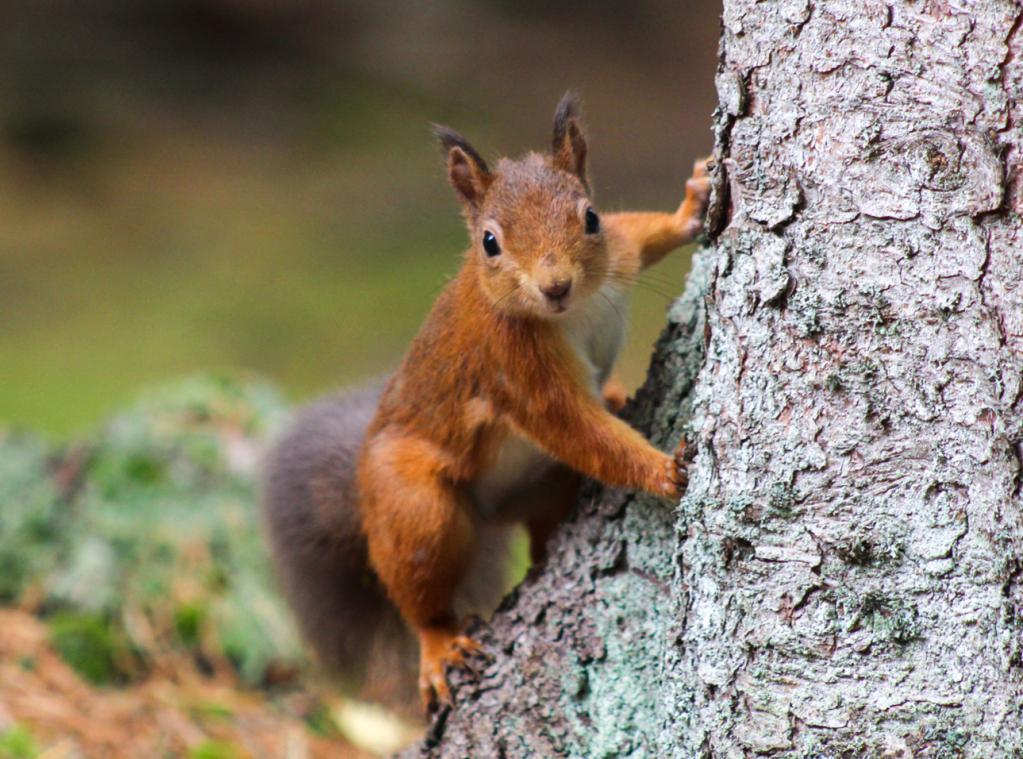
The Cornwall Red Squirrel Project is currently working to reintroduce red squirrels to the Lizard Peninsula. These animals were nearly wiped out of the UK when grey squirrels were brought over from North America. Grey squirrels outcompete them, being larger and more robust. This makes red squirrel reintroductions difficult: before they are brought back, the grey squirrel population must be controlled or removed. During lockdown, the grey squirrel population on the Lizard regrew, delaying red squirrel reintroductions.

Cirl buntings

The RSPB reintroduced cirl buntings (the UK’s rarest farmland bird) into the Roseland peninsula, releasing them annually between 2006 and 2011. By 2015, their efforts had resulted in a self-sustaining population with over 50 breeding pairs.

European Wildcats

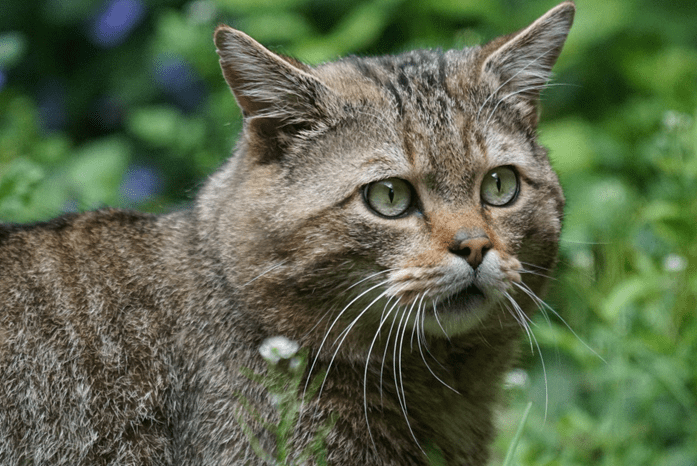
The UK’s only native cat is returning to Devon and Cornwall. European wildcats were hunted to extinction in Southern England in the 16th century. They are significantly larger than domestic cats, with thicker coats. (The UK’s domestic cats are non-native, descending from African wildcats.) Wildcats are mesopredators: they are mid-ranking in the food chain, preying on small animals like rodents.

40 – 60 individuals are set to be released. The exact locations of their reintroduction sites are secret, for the wildcats’ protection. These shy, solitary animals tend to avoid humans, and are expected to help control rodent and rabbit populations.


Where will we go from here?

This may just be the beginning of Cornwall’s rewilding. As we bring back more species, to more areas, and set aside land for their habitats, our ecosystems may become healthy and thriving once more.

This is vital for Cornwall’s human residents, not only its non-human ones. In the modern world, we often feel disconnected to nature. This is dangerous as it obscures our reliance on it. Healthy ecosystems reduce flooding, drought, and soil erosion. They stabilise climates and provide clean air and water. They also minimise disease: increased biodiversity helps buffer disease transmission. For example, multiple studies on US ecosystems found that those with fewer bird species have higher occurrences of West Nile encephalitis. This is a direct threat to us: two-thirds of our infectious diseases are shared with non-humans.

Public support for species reintroductions is high. Piece by piece, species by species, we can put our damaged ecosystems back together and bring back the stunning natural beauty we’ve lost.

CSC excursion

AK Wildlife Cruise 2023

with Emily Stevenson of Beach Guardian and Dr. Roger Wood (Cornwall Science Community)

Saturday, 25th March; 11am-2pm (approximately) and 2:455:45pm (approximately). Cruise leaves from and returns to Falmouth Premier Marina. See end of post for booking details.

Please note that due to high interest we now have two cruises on the same date. Both will be accompanied by Emily Stevenson.

AKWC will strive to make your day enjoyable by helping you get to know the beautiful animals in our region and engage with Cornwall’s wonderful marine environment. Join us in search of some of the fantastic marine wildlife to be found in Falmouth Bay, such as seabirds, dolphins, seals and basking sharks!

These 4 hour (minimum) wildlife cruises are a superb way to see the spectacular coastline and surrounding waters, and are popular with all ages.

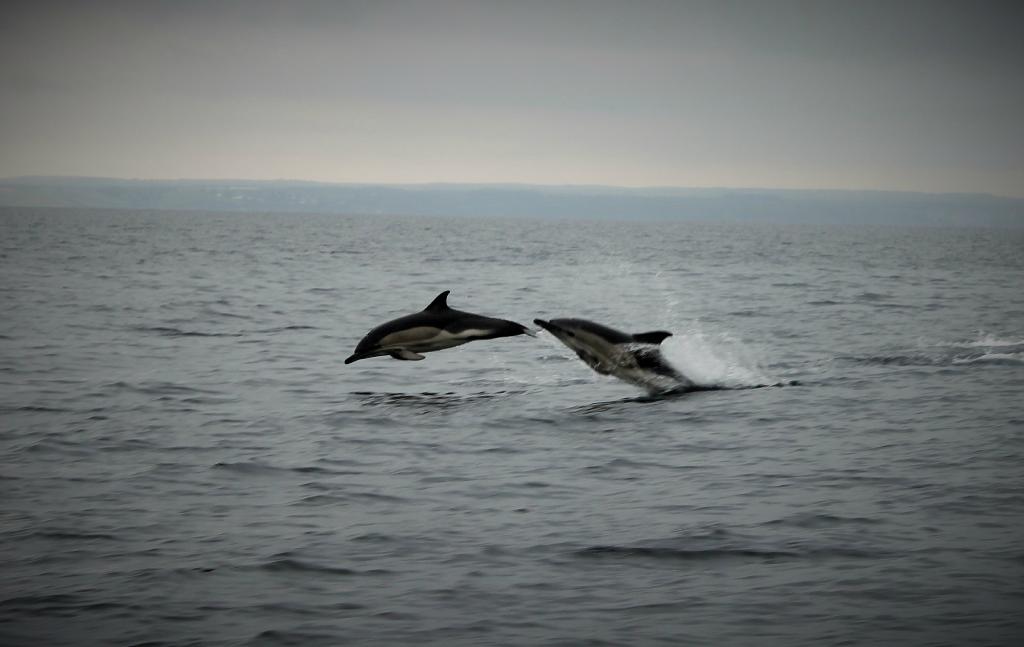
Image courtesy AKWC

You will spend your trip exploring the southern coast of Cornwall as we cruise under the impressive granite cliffs, and search for wild animals which inhabit this region of the British Isles, such as huge basking sharks, harbour porpoises, bottlenose dolphins, grey seals and a diversity of coastal birds. We will then spend some time offshore in search of pelagic species such as common dolphins, minke whales and storm petrels.

If for any reason the weather becomes too rough to leave the Carrick Roads and head offshore, we will still continue with the trip but head back up the Carrick Roads and explore our wonderful and wildlife rich Fal estuary. Please bring warm clothes and full waterproofsBinoculars recommended.

We shall be joined by Emily Stevenson, who has given two superb recent talks for the Cornwall Science Community and is the founder of Beach Guardian.

Emily will be talking with us about primary and second microplastics, and, as part of the cruise, will be collecting microplastics from the ocean using wildlife-friendly methods.

Emily Stevenson on microplastics for CSC

The skipper, Captain Keith, has vast experience of working in the private boat chartering business over the many years of his long-standing career. Throughout this time, he has worked closely with such people as Dame Ellen MacArthur, working as her towboat captain during her record-breaking round the world trip. He has also worked alongside a selected team in the “Whitbread Round the World Race”, plus several other cross-Atlantic challenges that finished off at the Lizard Point in Cornwall. Keith is a dedicated, professional wildlife guide, who, in the past, has worked with “The Really Wild Show” and their presenter, Michaela Strachan, filming basking sharks.

Furthermore, he has carried out survey work for the Whale and Dolphin Conservation Society (WDCS) and the RSPB. AK Wildlife Cruises were the very first operator in the UK to endorse and sign up to the nationally accredited “WiSe” scheme, as well as being endorsed by the SeaWatch Foundation and the WDCS, ensuring sensitive interaction with all the marine mammals and birds observed during their “seafari” excursions.

Image courtesy AK Wildlife Cruises

Please note, AK Wildlife Cruises and Cornwall Science Community cannot guarantee any specific wildlife sightings.

The boat, RV Spirit of Our Seas is a catamaran with modern toilet facilities and open outdoor seating provided for all guests, so you can enjoy a truly comfortable journey as we explore the beautiful coastline in search of wildlife.

AK Wildlife Cruises are fully insured and coded as required by the MCA, and with first aid trained staff and full safety equipment on board, you can sit back and enjoy the trip as all is taken care for you. The boat is licensed to carry up to twelve guests plus two crew members. Keeping parties intimate gives you more space and better chance to speak with the fantastically knowledgeable crew.

The reduced cost, for this Cornwall Science Community Wildlife Cruise, will be £63 per person. There are a maximum of 7 places available at the time of writing.

The cruise will depart from Falmouth Premier Marina, North Parade, Falmouth. TR11 2TD

Bookings and payment will need to be made directly with AK Wildlife Cruises. Please e-mail info@akwildlifecruises.co.uk or call Jess on 07553 606 838.

Further details may be found at https://www.akwildlifecruises.co.uk/ and https://www.akwildlifecruises.co.uk/trip-info/

Dr. Roger Wood, the Cornwall Science Community’s Project Officer, will also be on the cruise. If you would like to let Roger know that you have booked a place, not least as a means of having a ‘friendly face’ looking out for you at the Marina, please feel free to e-mail him at dwood@brookes.ac.uk.