Archive

Cafe Sci

The Case for Methane Capture | Net Zero Methane Hub

Thursday, 10th October 2024 at the Poly, Falmouth

In-person attendance via the Poly website.

Virtual attendance via Eventbrite.

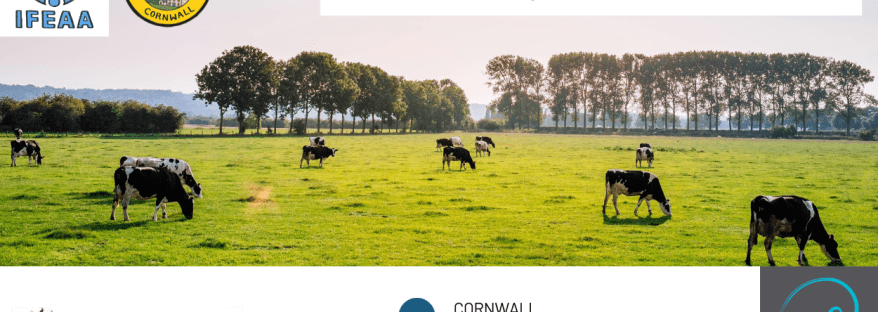
This talk will explore the innovative Net Zero Methane Hub initiative in Cornwall, focusing on utilising methane emissions from dairy farms.

About the talk

FThis talk will explore the innovative Net Zero Methane Hub initiative in Cornwall, focusing on utilising methane emissions from the region’s dairy farms to produce sustainable energy. Methane, a potent greenhouse gas, is a major contributor to climate change, and dairy farming is one of the largest sources of methane emissions globally. By capturing methane from manure and other waste products, Cornwall’s farms can transform this harmful gas into renewable energy, reducing emissions while providing a new energy source for local communities.

In the UK, methane, nitrous oxide, and fluorinated gases are the largest contributors to global warming after CO2. Methane is a powerful greenhouse gas, with a global warming potential 86 times that of CO2 over a 20 year period. The importance of reducing methane emissions to mitigate climate change was recognised at COP26 where the Global Methane Pledge was launched.

With the government’s commitment to achieving net zero by 2050, initiatives like the Cornwall Methane Hub are critical. They showcase how local action, particularly in dairy-heavy regions like Cornwall, can contribute to national and global methane reduction efforts, turning environmental challenges into opportunities for renewable energy development.

About the speaker

The Net Zero Methane Hub is an SPF-funded project coordinated by IFEAA. IFEAA’s expertise extends to a variety of sectors, including Advanced Propulsion Systems, Cryogenics, Medical devices, electro-magnetics, cyber risk analysis Farming, Politics, our work includes working with local organisations such as South West Water, Climate-I and Bennamann.

Methane Hub Aims:

• Initiate a supply chain of net zero methane producers and users sharing the latest research and showcasing methane capture technology.

• Identify innovation and research needs for methane capture and use technology, growing new research and development collaborations.

• Grow finance opportunities for methane capture and use technology, linking with the finance community to encourage investment.

• Support skills development by highlighting higher and further education needs. Visit local schools and engage with communities to grow understanding of the approach.

• Share Hub outcomes with local and national policymakers to support evidence-based policy, host a Net Zero Methane Hub Conference in Cornwall.

Cafe Sci

Antimicrobial resistance in rivers – a public health risk? | Elitsa Penkova

Thursday, 20th June 2024 at the Poly, Falmouth

In-person attendance via the Poly website.

Virtual attendance via Eventbrite.

Freshwater environments naturally harbour diverse microbes but are also subject to human- and animal-associated bacteria and contaminants.

About the talk

Freshwater environments, such as rivers and lakes, naturally harbour diverse microbes but are also subject to human- and animal-associated bacteria and contaminants.

Growing rates of antimicrobial-resistant bacteria are a significant public health threat. Recent research suggests that person-to-person transmission alone may not fully explain how the current levels of drug-resistant infections are maintained in the general public and suggest that other sources, such as the natural environment, could be an important contributor. For example, wastewater and agricultural run-off are strongly linked to increased levels of antimicrobial resistance in riverine bacteria, thereby increasing the risk of transmission.

The increasing popularity of recreational activities, like river swimming in the UK, has raised concerns about people’s exposure to antibiotic-resistant bacteria. Although emerging evidence suggests a link between spending time in these environments and resistant infections, research remains limited.

To address this, Elitsa Penkova will outline her PhD project which investigates the potential health risks of antimicrobial-resistant bacteria in rivers and lakes through three key studies: a systematic review assessing the current evidence on this topic; an online health questionnaire investigating the risk of experiencing illness after a river swim; and an epidemiological study (the ‘Poo-Sticks’ survey) directly investigating links between exposure to faecally-polluted water and the risk of gut colonisation by resistant bacteria in river swimmers.

About the speaker

Elitsa Penkova is an evolutionary (micro-) biologist now transitioning to an environmental epidemiologist, researching bacterial resistance to antibiotics. Her goal is to produce research that offers compelling evidence for policy makers, ultimately aimed at safeguarding public health.

Cafe Sci

Bio-Semiotics Part Two | Robin Johnson

Thursday, 16th May 2024 at 6pm.

Tickets available for attendance

In part two of his exploration of this paradigmatic shift in the life sciences, Robin will be delving deeper into what bio-semiotics all may mean for the ways we can understand ourselves.

About the talk

You can find Robin’s January talk on bio-semiotics on YouTube.

Robin will continue his exploration of the potential that there may be in a relatively new approach in contemporary biology that offers a fresh and radically different account of the nature of our humanity than the one we have seen from 20th Century evolutionary psychology and sociobiology.

We will have a short reprise of the concept of the Umwelt, as a novel perspective on subjective, ‘lived’ experience, and of the new paradigm of bio-semiotics. From here, Robin will be asking; what does this new view of biology mean for the social sciences?

If time allows, we will come back to the growing understanding of psychological and emotional trauma and the dynamics of social exclusion; and the work of many creative services in turning lives around.

About the speaker

Robin Johnson was a psychiatric social worker, then a specialist advisor on mental health and housing issues with the Department of Health and later a journal editor and a visiting fellow at several universities. Robin’s work included setting up PIElink, a platform to connect people addressing the psychological and emotional issues that go with homelessness and other complex psychological and emotional needs. He has recently published two books on these ‘Psychologically Informed Environments’.

Cafe Sci

Tracking the Iconic Atlantic Bluefin Tuna from Cornwall

Thursday, 21st March at 6pm.

Tickets available for attendance

Join Tom for an evening talking tuna.

About the talk

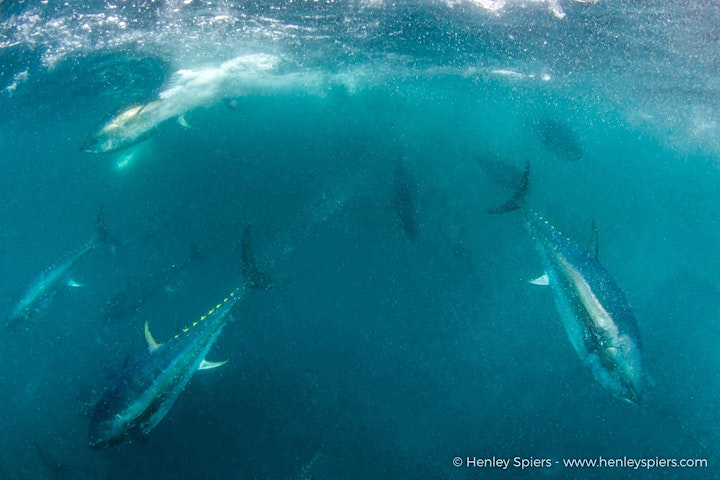
Join Tom for an evening talking tuna. Over the past decade we have seen the iconic Atlantic bluefin tuna return to waters off Cornwall. Tonight we use electronic tracking to shed light on the secret lives of the fish that once again call Cornwall home for a few months of the year.

Where do they go when they leave? What do they do there? and do they come back?

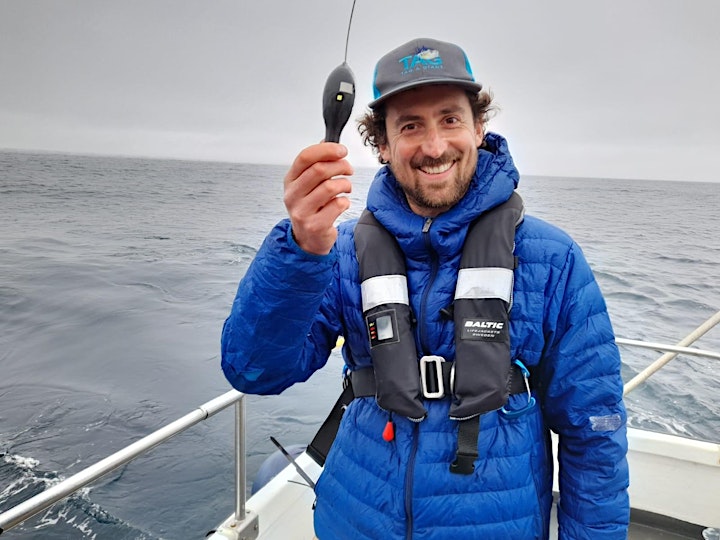
Tom Horton is a conservation scientist based at the University of Exeter. His work focuses on the spatial ecology of marine animals, including fisheries interactions, behaviour, and migration ecology. Previous work has included using fisheries data to document the return of Atlantic bluefin tuna to the UK and Ireland working as the Project Officer for Thunnus UK.

Cafe Sci

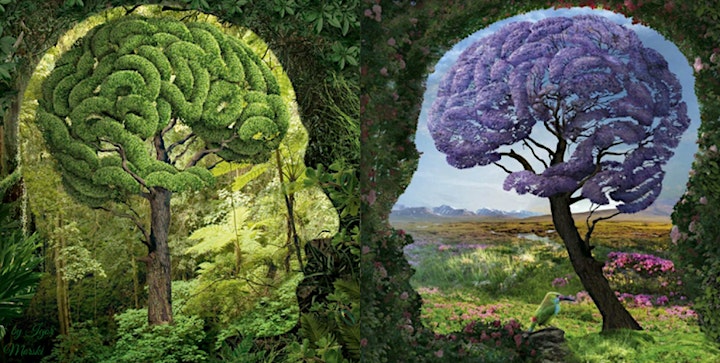
Bio-Semiotics – A New Foundation For Social Science?

Thursday, 18th January 2024 at 6pm.

Tickets available for attendance

Join Robin Johnson as he explores a relatively new approach in contemporary biology.

.

About the talk

Robin will explore the potential that there may be in a relatively new approach in contemporary biology that offers a fresh and radically different account of the nature of our humanity than the one we have seen from 20th Century evolutionary psychology and sociobiology.

The starting point will be the concept of the Umwelt, as developed by Jakob von Uexkell, as a novel perspective on subjective, ‘lived’ experience.

He will be illustrating this potential in the context of our growing understanding of ‘complex trauma’, compound psychological and emotional trauma, the dynamics of social exclusion and the work of many creative services in turning lives around.

About the Speaker

Robin Johnson was a psychiatric social worker, then a specialist advisor on mental health and housing with the department of health and later a journal editor and a visiting fellow at several universities. Robin’s work included setting up PIElink, a platform to connect people addressing psychological and emotional issues that go with homelessness and other complex psychological and emotional needs. He has recently published two books on these Psychologically Informed Environments.

Cafe Sci

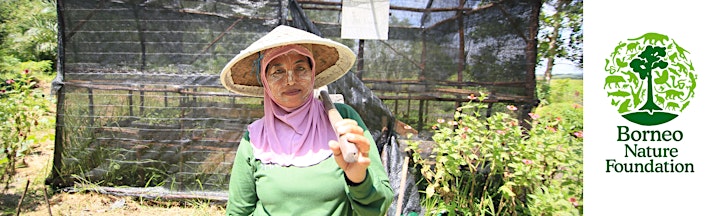
Rooting for Rainforests: how local communities are paving the way for conservation in Borneo

Thursday, 16th November 2023 at 6pm.

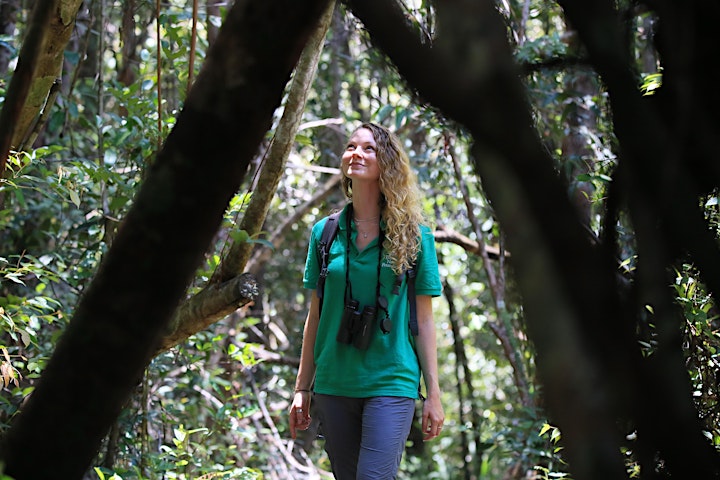
Samantha Salt, Borneo Nature Foundation’s Senior Engagement Officer tells us how local communities are paving the way for conservation in Borneo.

A Café Sci event hosted by Cornwall Science Community.

With climate change raising its ugly head through extreme weather events and wildfires all around the world, and with our rainforests being lost at an alarming rate, there’s never been a more important time to find long-lasting solutions for people and planet. Borneo’s rainforests are special; they are the only place in the world home to the Critically Endangered Bornean orangutan and its very deep peat deposits make it one of the largest land-based carbon stores on Earth. What happens in Borneo impacts us all.

At the Borneo Nature Foundation, we have powerful, local and grass-roots solutions for this global problem. We work with a range of vital stakeholders from the National Park and the government to local communities and school children to understand, restore and protect the rainforest for future generations.

Our projects have been globally recognised, having received the Global Warming Mitigation Project’s Keeling Curve Prize (2020), the World Economic Forum’s Trillion Trees Challenge and People’s Choice Award (2020), and the iF Design Social Impact Prize (2022). Come along to this talk to learn about the magic of Borneo, the world-leading ways we’re supporting and empowering local people to be global conservation leaders, and how you can be a part of it.

Sam is Borneo Nature Foundation’s Senior Engagement Officer, working to raise international awareness of the charity’s on-the-ground conservation projects in Indonesia. Having spent time in the rainforest working directly with the project teams, she has first-hand experience and many stories to tell. Prior to working at the Borneo Nature Foundation, Sam studied her master’s and bachelor’s degrees in conservation at the University of Exeter’s Penryn campus here in Cornwall.

Cafe Sci

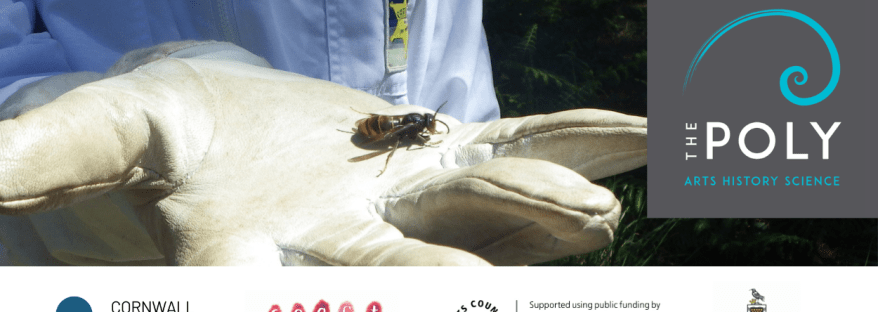
The Invasive Hornet Vespa velutina: Why the concern, and what can be done?

Thursday, 21st September 2023 at 6pm.

Tickets available for attendance

Dr Thomas O’Shea-Wheller tells us how the invasive hornet disrupts honey bee colonies and how we can prevent it becoming established in the UK.

The invasive Asian hornet (Vespa velutina nigrithorax) has spread rapidly across parts of Europe and East Asia in the last two decades, with concordant effects upon beekeeping, agriculture, and biodiversity. The hornets are effective predators of a variety of native pollinators, and will actively target colonies of honey bees (Apis mellifera), leading to disruption of the foraging process. While there have been concerted attempts to control the expanding invasion front, these have been largely unsuccessful, due to the difficulty of detecting initial incursions into new regions. In this talk, Thomas will outline recent research aiming to address this issue, and summarise the ongoing efforts to prevent the hornets’ establishment in the UK. Additionally, Thomas will summarise how the public can assist in these efforts, and hence contribute to the UK’s pre-emptive exclusion strategy.

Thomas is a Research Fellow based at the University of Exeter’s Environment and Sustainability Institute (ESI). His work investigates the rules underpinning collective behaviour, colony functioning, and self-organisation within social insects. A central aim of this research is to leverage complex systems—specifically those found in insect colonies—to solve real-world challenges in biology. To achieve this, he utilises ants, bees, hornets, and termites as models to explore network dynamics, interindividual heterogeneity, and social immunity. Thomas’s current research includes projects pertaining to honey bee health and epidemiology, automated tracking of bumble bee colonies, and the detection of invasive species via artificial intelligence.

Cafe Sci

The Power of Marine Citizen Science

Thursday, 15th June 2023 at 6pm in person at the Poly, Falmouth and online.

Join us for an evening with Ben Holt, Co-founder and CEO of The Rockpool Project, as he takes you on a journey into the hidden worlds of rockpools in Cornwall.

The Rockpool Project are a not-for-profit community interest company, passionate about connecting people of all ages and backgrounds to the incredible wildlife found around our coastline. Their work encompasses ecotourism, community engagement, education and citizen science.

Ben has spearheaded rockpool conservation and education in the South West since the inception of the organisation and will spend the evening presenting their most exciting current and upcoming projects. So come along, dip your toes in to Cornish rockpools, join the conversation and find out how you could get involved.

Cafe Sci

‘Bringing Rivers to The Poly’: A talk by The Westcountry Rivers Trust

Thursday, 18th May 2023 at 6pm.

Join us when Westcountry Rivers Trust bring rivers to The Poly! Hear all about their projects and how you could get involved.

This event will be held in-person at the Poly in Famouth, or online via Zoom – online tickets can be bought via Eventbrite. Please follow the relevant links above.

About the talk

Join the Westcountry Rivers Trust (WRT), an environmental charity putting science at the heart of its river conservation in Cornwall for an evening of conversation and films.

From source to sea, clean, flowing rivers support the resilience of their surroundings – ecosystems, wildlife, people and their livelihoods. Across a variety of projects, WRT is tackling river-related challenges to ensure freshwater habitats, and all who depend on them, can thrive.

Come along to learn about some of the charity’s projects restoring and protecting the county’s rivers and wildlife, and how being a citizen scientist with the charity makes a big impact for the short and long-term health of the waterways being monitored. Plus, be among the first to see its short new film ‘Science, Citizens and a Love of Westcountry Rivers’, showcasing the charity’s river guardians of the region.

This session comes to Falmouth as a part of the ‘Bringing Rivers to You’ campaign, where WRT is taking the joys and stories of local rivers into bustling town centres to reconnect communities with their waterways.

Cafe Sci

Climate Crisis on our Doorstep?

Thursday, 20th April 2023 at 6pm. At the Poly, Falmouth or via Zoom. Buy your in-person tickets on the Poly website or register for virtual attendance via Eventbrite.

Marine plastic pollution is one of the most visible environmental problems of our time – but has it made us miss the elephant in the room?

Introducing hybrid café sci: Join us in-person at the Poly, Falmouth – or dial in on-the-day via Zoom (link will be circulated via our mailing list).

In-person tickets are £2.50 plus fees and Poly fund payment to cover the Poly’s expenses and can be purchased on their website.

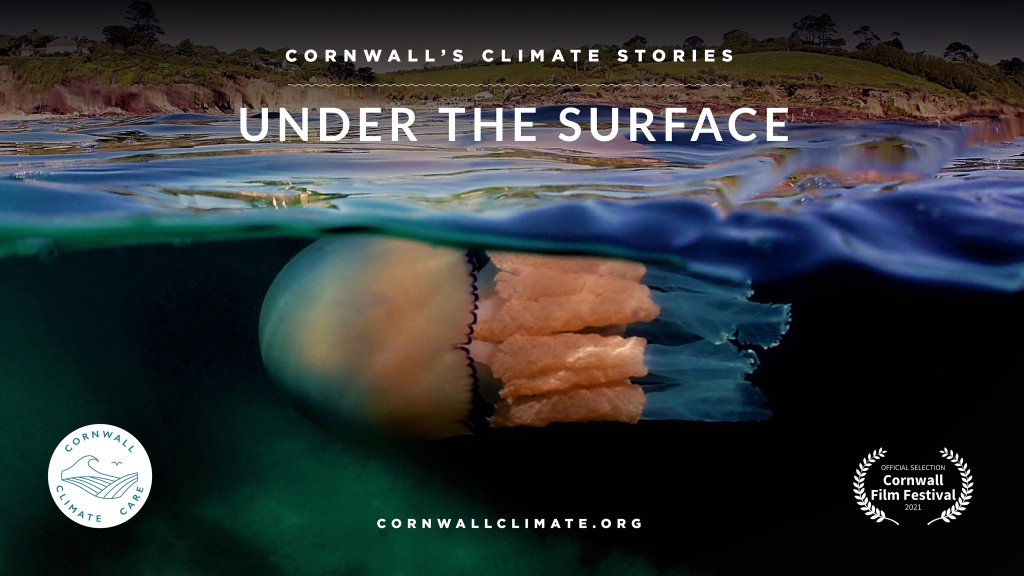
Cornwall Science Community hosts a Café Sci event with Claire Wallerstein. Claire will be presenting her Cornwall Climate Care film: Under the Surface.

Claire spent many years running a Cornish beach cleaning group and campaigning about marine plastic.

However, over time she started to question whether the huge public focus on the very obvious issue of plastic pollution might mean we were failing to address a much bigger problem for the marine environment – climate change.

Claire Wallerstein set up and for eight years ran an extremely active Cornish beach cleaning and marine plastic campaigning charity, and was the co-founder of the Cornish Plastic Pollution Coalition.

She now works as the producer for the charity Cornwall Climate Care, which is making a series of 30-minute documentaries about various climate-related topics, aiming to inspire community conversations and action in Cornwall.

Her previous professional background was in print and radio journalism, reporting from South East Asia and South America for the Guardian and BBC World Service, among others. She was also a press officer for the International Fund for Animal Welfare, and worked for many years as a translator in Spain.